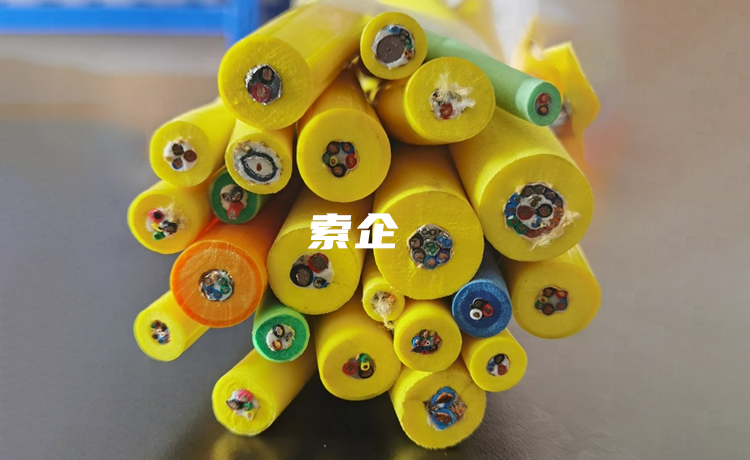
Category: Seawater-Resistant Cable
Hotline
Tel: +86 133 1175 6197
WeChat: L13311756197
Email: postmaster@suoqi-cable.com
Deepwater Detection Cables | Underwater Equipment Cables | Floating Cables - Shanghai Suoqi Electric Wire & Cable Co., Ltd
Shanghai Suoqi Wire & Cable Co., Ltd., as a high-tech enterprise, has been deeply involved in the field of special wires and cables for many years. Relying on a professional technical team and strict quality control system, it provides high-performance, reliable cable products for deep-water detection, underwater equipment, and floating applications.
1. Product Overview
Our deepwater detection cables, underwater equipment cables, and floating cables are specially designed for complex underwater environments, integrating multiple advanced technologies and premium materials to meet the stringent demands of various underwater operations, ensuring stable equipment operation and precise data transmission.
2. Deep water detection cables
(1) Outstanding Performance
Ultra-high voltage resistance: Uses insulating materials with strong pressure resistance, such as cross-linked polyethylene (XLPE), which can withstand immense water pressure in deep waters, maintaining excellent insulation performance even at thousands of meters deep, ensuring stable signal transmission and preventing electrical failures caused by water pressure.
Corrosion resistance: The outer sheath is made of polyurethane (PUR) or specially modified polyvinyl chloride (PVC), offering excellent resistance to acids, alkalis, greases, and salt solutions, effectively resisting the erosion of complex chemicals in the deep sea and extending cable lifespan.
Wide temperature adaptability: Able to operate normally in a temperature range of -40°C to 80°C, it can run stably whether in the cold polar deep sea or the high-temperature hydrothermal areas of the ocean floor, adapting to the temperature conditions of different global seas.
Precise signal transmission: The conductor is made of high-purity oxygen-free copper wire, twisted through a special process to reduce resistance, minimize signal attenuation and distortion, and ensure that detection data, images, and other information are accurately transmitted to surface equipment.
High flexibility and fatigue resistance: The conductor structure of multiple fine copper strands twisted together, combined with optimized cabling processes, gives the cable good flexibility, allowing it to be arranged flexibly in confined spaces, while also being able to withstand frequent bending and stretching, with excellent fatigue resistance, reducing damage caused by mechanical stress.
(2) Product Structure
Conductor: Made of high-purity oxygen-free copper wire, finely stranded, in compliance with relevant International Electrotechnical Commission (IEC) standards, ensuring excellent electrical conductivity and flexibility.
Insulation layer: Cross-linked polyethylene (XLPE) insulation, featuring high insulation resistance and low dielectric loss, effectively isolating conductors and preventing leakage and signal interference.
Shielding layer (optional): Uses tin-plated copper wire braided shielding, with a shielding efficiency of over 90%, effectively resisting external electromagnetic interference and ensuring the quality of signal transmission, suitable for detection equipment sensitive to the electromagnetic environment.
Inner sheath: Made of special rubber or plastic material, it protects the insulated conductor and enhances the cable's mechanical performance and waterproof performance.
Armor layer (optional): Depending on the usage environment and mechanical strength requirements, steel tape armor or steel wire armor can be selected to further enhance the cable's compression, tensile, and impact resistance.
Outer Sheath: The outer sheath is made of polyurethane (PUR) or specially modified polyvinyl chloride (PVC), offering multiple properties including wear resistance, oil resistance, waterproofing, and corrosion resistance, providing comprehensive protection for cables.
(3) Applicable Scenarios
Marine Geological Exploration: Equipment used for underwater seismic exploration, seabed topography mapping, and other purposes, accurately transmitting detection signals to support marine geological research and resource exploration.
Deep-sea organism research: Providing power and data transmission for deep-sea cameras, underwater sensors, and other equipment, helping researchers observe the habits of deep-sea organisms and explore deep-sea ecosystems.
Underwater Archaeology: In underwater archaeological operations, maintain a stable connection between detection equipment and the on-water control center to ensure the smooth progress of relic detection and protection work.
3. Underwater Equipment Cable
(1) Performance Highlights
Waterproof sealing: Uses a multi-layer waterproof structure design, combined with waterproof adhesive filling, sealing joints, and other technologies, achieving IP68 protection rating. It can be submerged in water for extended periods, effectively preventing moisture intrusion and ensuring safe equipment operation.
High flexibility and bend resistance: Optimize the conductor structure and insulation materials, making the cable highly flexible, capable of withstanding frequent bending and twisting motions of underwater equipment, with a bending lifespan of up to millions of times, reducing maintenance costs.
Stable electrical performance: The conductor has low resistance and excellent insulation properties, ensuring stable power transmission and signal control even in complex underwater environments to meet the electrical needs of underwater equipment.
Strong anti-interference capability: For cables with integrated signal transmission functions, through special shielding design and core layout, they effectively resist electromagnetic interference and ensure accurate signal transmission.
Reliable mechanical performance: It has certain tensile, compressive, and wear-resistant properties, and can withstand the mechanical stress generated by underwater equipment during operation, ensuring the integrity of the cable structure.
(2) Structural Characteristics
Conductor: Multiple fine copper wires twisted together to increase conductor flexibility and surface area, reduce resistance, and improve electrical conductivity efficiency.
Insulation: Uses high-performance insulating materials such as ethylene-propylene rubber (EPR) or specially modified polyolefins, offering excellent insulation and flexibility.
Core arrangement: According to cable functional requirements, arrange power cores, signal cores, control cores, etc., to reduce interference between conductors.
Shielding layer: For signal transmission conductors, copper strip shielding, braided shielding, or composite shielding methods are used to block external electromagnetic interference.
Outer sheath: Selected materials that are water-resistant, wear-resistant, and weather-resistant, such as polyurethane (PUR) or neoprene (CR), to protect the internal structure of the cable and enhance overall cable performance.
(3) Application Fields
Underwater Robots: Provide power and control signals for underwater robots, supporting flexible underwater operations to complete various complex tasks.
Underwater Lighting System: Stable power transmission, ensuring the brightness and stability of underwater lighting equipment, providing ample illumination for underwater operations.
Underwater monitoring equipment: connects water quality monitors, underwater acoustic monitoring devices, etc., enabling real-time data transmission to support environmental monitoring.
4. Floating cables
(1) Unique Advantages
Zero buoyancy design: Uses lightweight, high-buoyancy materials such as expanded polyethylene (PE) or polyurethane foam as cable filling layers or outer sheath materials, allowing cables to maintain zero buoyancy in water, preventing cable sinking and dragging on equipment, ensuring free floating and flexible movement.
Waterproof and corrosion-resistant: The outer cover uses materials with excellent waterproof performance, such as polyvinyl chloride (PVC) or polyurethane (PUR), and is specially treated to provide excellent resistance to seawater corrosion and chemical corrosion, allowing long-term use in harsh water environments.
High flexibility and tangle resistance: The cable structure is compact, the conductor is soft, flexible, not easily tangled or knotted, making it convenient to arrange and use in aquatic environments, improving work efficiency.
Signal and Power Transmission Stability: Carefully designed conductor and insulation structures ensure stable transmission of power and signals even in a floating state, meeting the operational requirements of water-based equipment.
(2) Product Structure
Conductors: Multi-stranded copper conductors or tin-plated copper conductors, providing excellent electrical conductivity and flexibility.
Insulation layer: Polyethylene (PE), cross-linked polyethylene (XLPE), or polyurethane (PUR) insulation, offering excellent insulation and waterproof properties.
Padding layer: lightweight foam materials, such as expanded PE or polyurethane foam, provide buoyancy and ensure the cable floats.
Sheath layer: High-density polyethylene (HDPE) or polyurethane (PUR) sheath, wear-resistant, corrosion-resistant, waterproof, protecting the internal structure of the cable.
(3) Applicable Scenarios
Water Buoy: Provides power and signal transmission for the buoy, ensuring its stable operation on the water surface and realizing functions such as navigation and monitoring.
Floating photovoltaic power generation: connects floating solar panels with underwater inverters to transmit electricity, ensuring stable and efficient power transmission in a floating state.
Water recreational facilities: Power supply and control circuits for recreational equipment such as jet skis and water slides, meeting their usage requirements in a water environment.
