Category: Products
Hotline
Tel: +86 133 1175 6197
WeChat: L13311756197
Email: postmaster@suoqi-cable.com
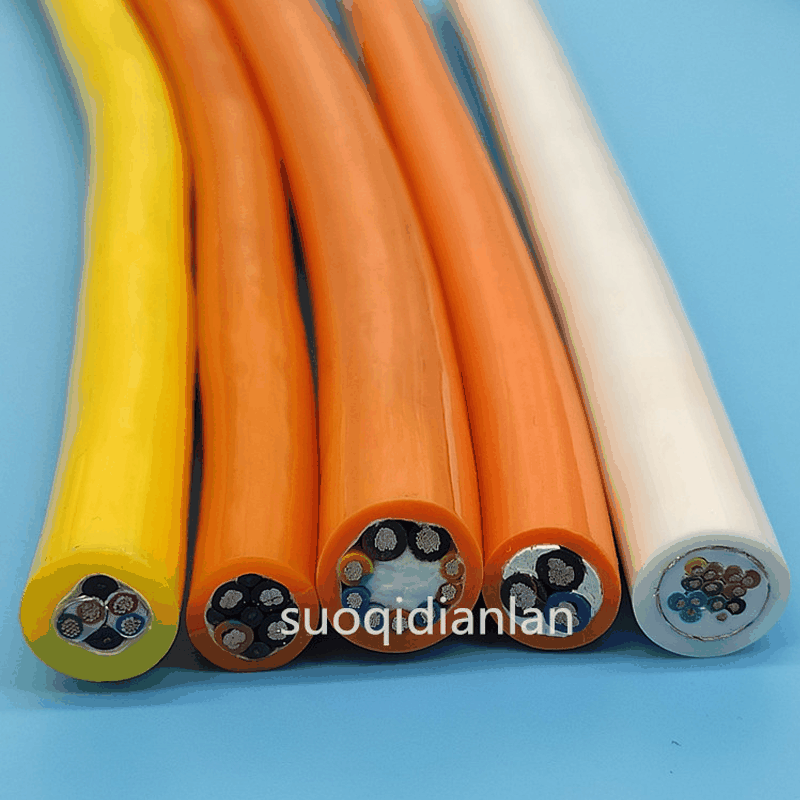
In coastal ports, aquaculture, shallow water operations, and other water-involved environments, ordinary cables are corroded by seawater ions, causing rapid aging of the insulation layer and oxidation and rust of the conductor, posing significant safety risks. To address this issue, Shanghai Suoqi has optimized its seawater-resistant cables in both materials and manufacturing: conductors are made of multiple strands of oxygen-free copper wire, insulation uses special waterproof elastomer, outer sheath is salt-spray resistant polyurethane (PUR), with double-layer sealing and waterproof adhesive filling, achieving an IP67 waterproof rating. In actual applications, the products have been recognized by customers in the chemical, marine, and underwater sectors for their corrosion resistance, wear resistance, and waterproof performance. Customization according to drawings and direct shipment from stock are supported. For details, please contact 13311756197.
Product Features
Fully sealed protection, long-lasting waterproof and impermeable protection. The cable's overall protection rating is IP68, allowing stable operation at depths of 15 meters for extended periods. The multi-layer sealed structure prevents seawater from entering inside. The outer sheath hardness reaches Shore 90A, offering excellent wear resistance. Even under harsh conditions such as reef friction and seabed sediment erosion, the protective layer remains intact, extending cable service life.
3. Application Scenarios: Marine energy development: Suitable for laying submarine cables and connecting tidal energy power generation equipment in offshore wind farms, ensuring stable energy transmission.
Port and ship industries: Used for port cranes, ship ballast water treatment systems, and underdeck cable routing, resisting corrosion from sea breeze, salt spray, and engine room oil contamination.
Underwater Detection and Engineering: Provides reliable power and signal transmission for underwater robots, subsea pipeline monitoring equipment, and cross-sea bridge pile foundation inspection devices.
Chemical and salt mining sectors: Used as power supply and control cables for equipment in corrosive environments such as chemical plant areas and salt mining sites.
Application scenarios
Industrial automation, machinery manufacturing, port terminals, and mining operations
Customized services
Shanghai Suoqi Cable provides guidance for seawater-resistant cable selection and custom production services on demand. Multiple cores and specifications can be produced, with flexible combinations of stock and future deliveries. For details, call 13311756197 (same number on WeChat).
Frequently Asked Questions
What are the key points for selecting cables for offshore platforms?
Clarify water depth, whether it moves, temperature range, and mechanical stress, and prioritize salt spray-resistant PUR sheaths with tensile reinforcement structures.
Why do seawater protection cables use tin-plated copper conductors?
The tin plating layer blocks corrosion of copper caused by seawater chloride ions, and together with the PUR sheath and composite shielding, it ensures long-term underwater electrical stability.
Related product recommendations
Professional customized solutions for seawater-resistant cables
Application of seawater-resistant cables in construction scenarios
Structural design and material selection for seawater protection cables
Selection Tips
This page is designed for underwater equipment power supply scenarios in the underwater area of port terminals, produced according to oil and corrosion resistance requirements, and specifications cover multi-core combinations. Conductor structure and sheath material can be adjusted according to on-site laying method, bending radius, and operating speed, supporting customization based on drawings.
