Category: Products
Hotline
Tel: +86 133 1175 6197
WeChat: L13311756197
Email: postmaster@suoqi-cable.com
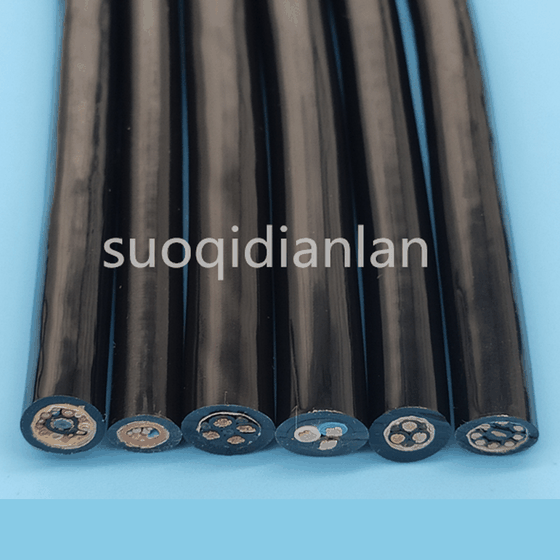
The key to selecting seawater protection cables is working conditions. Shanghai cables from Shanghai seawater protection companies use multi-stranded strands of oxygen-free copper wire, insulated special waterproof elastomers, with an outer sheath made of salt spray resistant polyurethane PUR, double-layer sealing with waterproof adhesive filling, IP67 waterproof rating, featuring core advantages such as corrosion resistance and high flexibility, and can be widely adapted to marine, tunnel, and underwater scenarios. Direct sales from the source manufacturer with stable delivery times. Welcome to call 13311756197 for selection plans.
Product Features
Comprehensive protection features against multiple threats Antimicrobial corrosion resistance: The seabed is a gathering place for various microorganisms, some of which secrete corrosive substances or attach to the cable surface to form biofilms, accelerating the corrosion of the cable. This cable, through special surface treatment technology, makes it difficult for microorganisms to attach, fundamentally preventing the damage caused by microbial corrosion. At the same time, its outer sheath material has a natural resistance to the corrosive substances secreted by microorganisms, further enhancing the cable's adaptability in the seabed microbial environment.
Adapt to complex acidic and alkaline environments: Affected by factors such as seabed geological activity and marine biological metabolism, the acidity and alkalinity of local seabed areas may vary significantly. Whether in strongly acidic hydrothermal zones on the seabed or in waters near estuaries with higher alkalinity, this cable can easily cope with the challenges of acidic and alkaline environments thanks to its unique material formulation and protective structure, without suffering sheath damage or conductor failure due to acid or alkaline corrosion, providing reliable connectivity for underwater tunnel and bridge projects.
Ultra-long Flexural Life Reduces Maintenance Costs: Through strict quality inspection and extensive real-world application verification, Shanghai Suoqi's submarine tunnel and bridge-specific seawater-resistant cables have an ultra-long flexural life. Compared with similar products on the market, their service life advantage is significant in environments with frequent bending. This means that during the entire service cycle of submarine projects, cables do not need to be replaced frequently, greatly reducing maintenance costs and time costs. For large infrastructure projects such as submarine tunnels and bridges, reducing cable maintenance work not only improves operational efficiency but also lowers the potential risks associated with maintenance activities, ensuring the continuous and stable operation of the project.
Core support for power transmission: As a key connecting component of the power systems of underwater tunnels and bridges, it provides stable and reliable power transmission for ventilation equipment, lighting systems, monitoring equipment, construction, and operation and maintenance equipment. In underwater tunnels, ventilation equipment requires a continuous and stable power supply to ensure air circulation inside the tunnel, providing a safe environment for passing vehicles and personnel; The stable operation of the lighting system is crucial to visibility and driving safety inside the tunnel. This cable can withstand large current transmissions, efficiently delivering electrical energy generated by onshore substations or offshore power platforms to various equipment, ensuring that these critical devices operate normally in complex underwater environments, providing a solid power foundation for the safe operation of underwater tunnels and bridges.
Key links between communication and monitoring: In modern submarine engineering, communication and monitoring systems are crucial for ensuring project safety and improving operational efficiency. Cables are used to connect various communication devices, such as submarine communication base stations and satellite communication terminals, enabling real-time communication between the seabed and land; At the same time, they connect various monitoring sensors such as temperature, pressure, displacement, and stress sensors to monitor the structural health of underwater tunnels and bridges and surrounding environmental parameters in real time. Through these communication and monitoring devices, project managers can promptly grasp project operating status, obtain important data such as weather information and traffic flow, and promptly identify and address potential issues, providing strong support for the safe operation of underwater tunnels and bridges. For example, during the construction of submarine bridges, stress sensors connected via cables can monitor stress changes in bridge structures in real time during construction, ensuring construction safety; During operation, data from temperature sensors and displacement sensors help managers promptly detect abnormalities caused by temperature changes, geological movement, and other factors, enabling early maintenance measures to ensure the bridge's service life and traffic safety.
Application scenarios
Industrial automation, machinery manufacturing, port terminals, and mining operations
Customized services
Shanghai Suoqi Cable provides guidance for seawater-resistant cable selection and custom production services on demand. Multiple cores and specifications can be produced, with flexible combinations of stock and future deliveries. For details, call 13311756197 (same number on WeChat).
Frequently Asked Questions
Why do seawater protection cables use tin-plated copper conductors?
The tin plating layer blocks corrosion of copper caused by seawater chloride ions, and together with the PUR sheath and composite shielding, it ensures long-term underwater electrical stability.
Do seawater-resistant cables need to undergo salt spray testing?
Required. High-quality products must withstand salt spray tests for ≥1000 hours to verify the jacket's resistance to marine corrosion and microbial erosion.
Related product recommendations
Tunnel engineering shielding structures for seawater protection cables
Cost optimization of seawater-resistant cables in construction
Shanghai Suoqi Seawater Protection Cable (Marine Engineering Underwater Sensor Power Supply · Low Temperature and Weather Resistance)
