Category: Products
Hotline
Tel: +86 133 1175 6197
WeChat: L13311756197
Email: postmaster@suoqi-cable.com
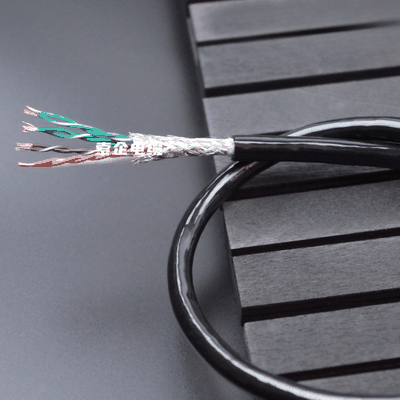
The key to selecting a seawater-resistant network cable lies in the working conditions. Shanghai Suoqi seawater-resistant network cables use high-purity oxygen-free copper conductors, twisted pairs with aluminum foil shielding, tin-plated copper overall shielding, and a seawater-resistant polyurethane (PUR) outer sheath. They offer stable underwater signal transmission and core advantages such as tensile strength, corrosion resistance, and shielding, making them widely adaptable to underwater, mechanical, and robotic scenarios. Direct sales from the source manufacturer with stable delivery times. Call 13311756197 for selection solutions.
Product Features
Suoqi Cable (Shanghai) Co., Ltd. specializes in designing and customizing electrical wires and cables for mechanical equipment used for extension/retraction and towing in deep water. Various specifications of underwater robot cables can be customized according to customer requirements, such as for signal transmission, power supply, and equipment control systems.
When ordering, please specify the usage environment: such as tensile load, whether it is used for mobile or fixed installation, underwater environment (freshwater or seawater) depth, etc. Underwater cables can be divided into: ① video cable; ② signal cable; ③ control cable; ④ power cable; ⑤ composite cable. Applications of underwater cables: Underwater ROV unmanned remotely operated vehicles - underwater filming, underwater salvage, underwater construction, etc. Equipped with underwater robotic arms, hydraulic cutters, and other working tools. The underwater environment is harsh and dangerous, and human diving depth is limited. Underwater robots have become an important tool for ocean development, and in such environments, ordinary cables are no longer suitable for operation, hence the emergence of underwater robot cables (special cables).
Suoqi Cable (Shanghai) Co., Ltd. specializes in designing and customizing electrical wires and cables for mechanical equipment used for extension/retraction and towing in deep water. Various specifications of underwater robot cables can be customized according to customer requirements, such as for signal transmission, power supply, and equipment control systems.
Underwater cable structure: conductor core: multiple strands finely stranded into bundles of fine-grade oxygen-free copper wire / anti-corrosion tinned copper wire Conductor structure: anti-twist layered structure; Grouped gap filling; Twisted pair structure followed by layered bundle Insulation: Waterproof mixed raw materials made from PVC / corrosion-resistant Teflon plastic Color: black number, white number number or color core color identification Tensile structure: polyester yarn fiber / high-strength anti-Lakevlar bulletproof wire / finely stranded steel wire Winding material: makes the wire more rounded and firm, can be added with raw tape (PTFE) or high-quality nonwoven fabric (high cost-effectiveness) Shielding: aluminum foil shielding / copper mesh braided / tin-plated copper mesh braided shielding Inner sheath: modified low-viscosity strong extrusion inner sheath customizable (optional for environmental requirements) Outer sheath: seawater-resistant special material (waterproof, acid and alkali resistant, radiation resistant, corrosion resistant, antimicrobial protection) Southeast Asian markets such as Japan, South Korea, the Philippines, Malaysia, Indonesia, Vietnam, Thailand, etc., do not yet have submarine cable production capacity. Many local regional submarine cable projects import optoelectronic composite submarine cables from Western Europe, which is very costly. Relatively speaking, Chinese submarine cable manufacturers have advantages in both cost and geographic advantage.
7. Easy to distinguish — the insulation color of the cores, the sheath color, and the cable length can be customized according to customer requirements ---
Application scenarios
Suoqi Cable (Shanghai) Co., Ltd. specializes in designing and customizing wires and cables for telescoping/dragging mechanical equipment in deep water. It can customize various specifications of underwater robot cables according to customer requirements, such as signal transmission, power supply, and equipment control systems. Underwater operation robot cables Seawater protection cables Usage characteristics Underwater operation robot cables Seawater protection cables Use characteristics Submarine cables are divided into submarine communication cables and submarine power cables. Submarine communication cables are mainly used for communication services, are expensive, but have high confidentiality. Submarine power cables are mainly used for underwater transmission of high-power electrical energy, serving the same function as underground power cables, but differ in application scenarios and laying methods. Because submarine cable engineering is recognized worldwide as a complex and difficult large-scale project, from environmental detection, marine physical surveys, to cable design, manufacturing, and installation, complex technologies are required. Therefore, there are only a few manufacturers of submarine cables, mainly Norway, Denmark, Japan, Canada, the United States, the United Kingdom, France, Italy, and others, which provide laying technology in addition to manufacturing.
Technical Parameters
Parameter item
Technical indicators
Underwater cable structure
Conductor core: multi-strand fine-stranded oxygen-free copper wire / anti-corrosion tinned copper wire; Conductor structure: anti-twist layered structure; Grouped gap filling; Twisted pair structure with layered bundling cable features: 1. High flexibility - high toughness - bending resistance - twist resistance (prevents internal cable breakage during frequent bending) 2. Wear resistance - notch resistance - high compression strength (outer sheath is stable against external force damage) 3. Electronic interference resistance - integrated braiding high shielding density and special structural design effectively resist external and internal interference, ensuring signal transmission stability 4. Tensile strength - underwater impact resistance - high-strength Kevlar tensile fiber acts as the cable's tensile center or tensile braiding, forming the cable into a round shape that evenly bears tensile forces, ensuring long-term effective operation without cracking. (When working underwater, cables can withstand the tensile forces of connected equipment or heavy objects, with a maximum breaking force of over 1 ton. In special cases, tensile steel wire can be added.) 5. Seawater Resistance—Extremely Strong Weather Resistance—Effective for underwater operation (cold resistance, oxidation resistance, antimicrobial resistance, radiation protection, corrosion resistance, ozone resistance, acid and alkali salt spray corrosion resistance). 6. Sheath—Made with imported TPU special materials mixed with special materials—Effectively designed for seawater and other harsh environments.
Customized services
Direct sales from Shanghai Suoqi cable factory source, supporting on-demand customization of multiple core counts and specifications. Ample stock available, nationwide shipping. Consultation hotline: 13311756197
Frequently Asked Questions
What is the difference between seawater protection cables and regular cables?
Ordinary cables are not resistant to salt spray or water immersion. Seawater-resistant cables use PUR sheaths and independent aluminum foil shielding, allowing long-term stable signal transmission underwater.
How to connect seawater protection network cables for waterproofing?
It is necessary to use waterproof connectors and sealing processes to prevent moisture from seeping along the cable core, which could affect the signal and lifespan.
Related product recommendations
Shanghai Suoqi Seawater Prevention Network Cable (Marine Monitoring, Port Security Surveillance, Low Temperature and Weather Resistance)
Tunnel engineering shielding structures for seawater protection network cables
Construction shielding structures for seawater protection network cables
