Category: Products
Hotline
Tel: +86 133 1175 6197
WeChat: L13311756197
Email: 923312606@qq.com
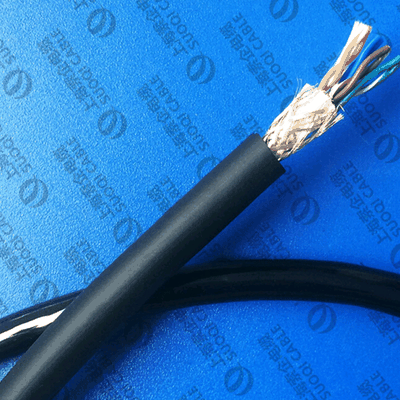
Scenarios such as marine monitoring and underwater aquaculture require high data transmission. Conventional cables cannot withstand seawater corrosion and humid environments, causing severe signal attenuation and communication interruptions. To address this pain point, Shanghai Suoqi has optimized seawater protection network cables from materials to processes: conductors made of high-purity oxygen-free copper, aluminum foil shielding for stranded wires, tin-plated copper total shielding, and outer sheaths resistant to seawater polyurethane PUR, ensuring stable underwater signal transmission. In practical applications, the products have been recognized by customers in marine, underwater, and robotics fields for corrosion resistance, polyurethane, and PUR performance. Supports customization by drawing and direct shipment from stock; please inquire for 13311756197.
Product Features
1. Core Product Advantages (1) Superior Corrosion Resistance Special Sheath Material: Using polyurethane (PUR) as the main material for the outer sheath, this material has extremely excellent resistance to seawater corrosion and can effectively resist the erosion of high-concentration salts, microorganisms, and various chemicals in seawater. Even with long-term use, it is not prone to aging or cracking, ensuring the cable's service life in harsh marine environments.
(2) High flexibility and bending resistance: Multi-strand finely stranded conductor structure: The conductor is carefully twisted from multiple strands of fine copper wire, giving the cable excellent flexibility. This allows it to easily adapt to various complex operations in frequently bent and twisted underwater operations, making it less likely to break and ensuring continuous power and signal transmission.
(4) Strong Tensile Strength Built-in Tensile Reinforcement Elements: Additional reinforcement elements such as Kevlar tensile fibers or galvanized steel wire ropes are added inside the cable. These high-strength materials can effectively share the tension the cable experiences during use, greatly enhancing the overall tensile strength of the cable, allowing it to withstand greater external pulling forces, and preventing cable damage due to excessive tension.
II. Diverse Application Scenarios (1) Marine Engineering Field Offshore oil drilling platforms: Provide stable power transmission for various equipment on the platform, such as drilling equipment, oil extraction equipment, and living facilities, to ensure the normal operation of the platform in complex marine environments. At the same time, they are used for signal connections between the platform and underwater equipment, ensuring accurate and timely data transmission.
(2) Underwater Robots and Unmanned Submersibles As power and signal transmission cables for underwater robots (ROV/UUV), Suoqi seawater-resistant cables can meet the needs of flexible movement and operation in complex underwater terrain. Whether it is deep-sea exploration, underwater salvage, or tasks such as subsea pipeline inspection, they can ensure that the robots receive a stable power supply and accurately transmit the collected data back to the control center.
Application scenarios
Industrial automation, machinery manufacturing, port terminals, and mining operations
Customized services
As a source manufacturer of special flexible cables, Shanghai cable companies can customize seawater-resistant network cables according to drawings or working conditions, with stable delivery times and controllable quality. Welcome to call 13311756197 to obtain solutions and quotes.
Frequently Asked Questions
What speeds do seawater-resistant network cables support?
The standard options are Cat5e/Cat6, with a bandwidth of 100MHz, meeting the video transmission requirements of underwater monitoring and marine monitoring.
How to connect seawater protection network cables for waterproofing?
It is necessary to use waterproof connectors and sealing processes to prevent moisture from seeping along the cable core, which could affect the signal and lifespan.
Related product recommendations
Fault diagnosis at port terminals for seawater network lines
Key points for selecting marine engineering types for sea defense network cables
Shielding structure of seawater-resistant network cables for power maintenance
