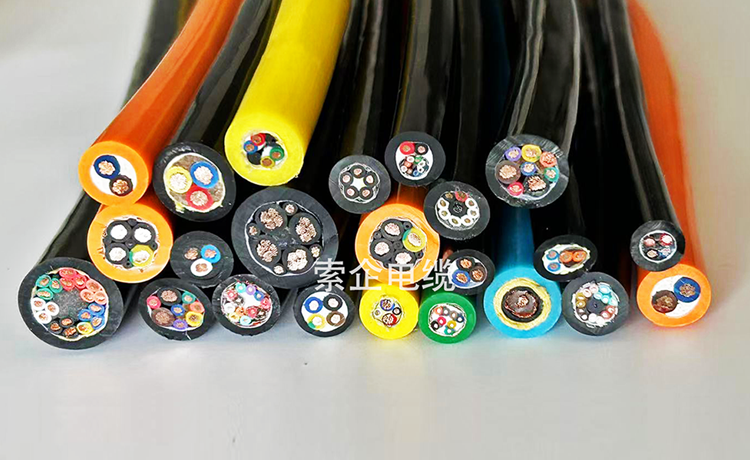
Category: Seawater-Resistant Cable
Hotline
Tel: +86 133 1175 6197
WeChat: L13311756197
Email: postmaster@suoqi-cable.com
Flexible Oil-Resistant Control Cable Detailed Introduction - Shanghai Suoqi
1. Company Strength
Shanghai Suoqi Electric Wire & Cable Co., Ltd. is a high-tech enterprise specializing in the design, production, and sales of special wires and cables. The company has gathered a team of highly skilled, experienced, and innovative technical engineers, possessing independent research and development capabilities and able to provide customers with comprehensive pre-sales and after-sales support services. With stable supply channels and a strict, scientific internal management system, the company consistently ensures high standards and uniformity of product quality. It can not only provide cost-effective products but also tailor ideal wire and cable solutions for customers according to different usage environments and electrical characteristic requirements.
2. Product Overview
This flexible oil-resistant control cable is specially designed to cope with complex industrial environments. It features excellent flexibility and outstanding oil resistance, capable of operating stably under various harsh conditions, providing reliable support for the control circuits of all kinds of equipment.
3. Product Features
High flexibility: Uses multi-strand stranded bare copper wire conductors or multi-strand flexible oxygen-free copper wire conductors (meeting relevant standard grades). The special stranding structure and reasonable pitch twisting process give the cable outstanding flexibility, easily adapting to frequent bending and twisting scenarios, effectively reducing the risk of cable damage caused by bending and ensuring long-term stability.
Excellent oil resistance: The insulation layer and outer sheath are made of high-quality oil-resistant materials, such as special polyvinyl chloride (PVC) blends or other oil-resistant polymer materials, which can effectively resist corrosion from various industrial oils, lubricants, and fuels. Even after long-term use in oily environments, they maintain good electrical and physical and mechanical properties, greatly extending cable service life.
Good electrical performance: The conductor uses high-purity copper with excellent conductivity and low resistance, effectively reducing power transmission losses and ensuring stable signal and power transmission. Careful selection of insulation materials and process control give the cable high insulation resistance and excellent dielectric properties, capable of withstanding voltage surges and ensuring safe use.
Reliable mechanical performance: It has certain wear resistance, tensile resistance, and tear resistance, can withstand moderate mechanical loads, and is not easily damaged by external forces during installation and use, making it suitable for relatively harsh mechanical usage environments.
Wide operating temperature range: The cable can operate normally within a wide temperature range. For fixed installation, the temperature range is generally -40°C to 80°C; for mobile installation, it is usually -15°C to 80°C (some specially customized products can meet more extreme temperature environments, such as -55°C to 105°C). It can adapt to temperature changes in different regions and seasons, as well as temperature requirements in certain special industrial environments.
Flame Retardant Properties: The insulation and sheath materials of the cable comply with relevant flame retardant standards, such as flame retardancy meeting the requirements of IEC 60332-1-2 and other standards. In the event of a fire or other emergency situations, it can effectively prevent the spread of flames and reduce safety hazards.
4. Product Structure
Conductor: Stranded bare copper wire conductor (such as 0.34mm² and other specifications, specific according to the model), or stranded flexible oxygen-free copper wire conductor, conforming to conductor classes specified in standards such as IEC 60228, DIN VDE 0295 (such as class 5 conductor), ensuring good electrical conductivity and flexibility.
Insulation: Special PVC insulation materials (such as PVC T12, following relevant standards) are used, offering excellent electrical insulation, oil resistance, and flexibility. The insulation color is determined according to standards or customer requirements. Generally, three-core and above cables have yellow-green grounding wires.
Core wire identification:
For cables with a cross-section <0.5mm², 5 cores and fewer are distinguished by color to comply with relevant standards (e.g., n.DIN 47100); Multi-core cables with 5 cores and above use color separation for white oil and chalk dots.
For cables with a cross-section ≥0.5mm², 5 cores and fewer use color separation, including yellow/green ground wires, meeting relevant standards; Multi-core cables above 5 cores use black cores and white oil plaster numbering (special requirements can be customized as needed).
Outer sheath: Special PVC or other oil-resistant materials are selected as the outer sheath, further enhancing the cable's oil resistance, wear resistance, waterproofing, and mechanical protection. Common sheath colors include black (RAL9005), gray (RAL7001), etc. Some models can also be offered in other colors such as orange according to customer requirements.
5. Product specifications
Rated voltage: Available in various specifications such as 300V / 500V / 1000V to meet the voltage requirements of different devices and application scenarios.
Test voltage: corresponds to the rated voltage, generally 2000V / 2500V / 3500V etc., ensuring no electrical faults during high-voltage testing and guaranteeing safe use.
Conductor resistance: At 20°C, the conductor resistance meets relevant standards (such as VDE 0295 and IEC 60228 Class 5 standards). The resistance characteristics of the multi-strand finely stranded copper wire ensure efficient power transmission.
Insulation resistance: ≥20 MΩ/km (20°C). The higher insulation resistance effectively reduces the risk of leakage and ensures stable electrical performance of the cable.
Bending radius:
For fixed installation, the bending radius is generally 4D - 6D (D is the outer diameter of the cable), with specific values determined by the cable structure and specifications to ensure the cable is not excessively bent or damaged during fixed wiring.
For mobile installation, the bending radius is usually 12D - 12.5D, meeting the requirements for frequent cable bending in mobile devices.
Number of cores and conductor cross-section: Offers multiple options for the number of cores (such as 2-core, 3-core, 4-core, 5-core... multi-core customization available), with a wide range of conductor cross-sections (from smaller sections like 0.34mm² to larger sections like 240mm², customizable specifically), meeting the control circuit quantity and current-carrying requirements of different equipment.
6. Scope of Application
Industrial automation field: Used for connecting control lines of various automated production lines, robotic equipment, and automation control systems, ensuring precise control and stable operation of equipment.
Mechanical Equipment Manufacturing: Used as power and control cables in machinery such as machine tools, injection molding machines, printing machines, and packaging machines, it can adapt to the frequent movement, bending, and twisting of the equipment during operation.
Petrochemical industry: Suitable for the control and connection of instruments, electric valves, pumps, and other equipment in refineries, chemical plants, oil fields, and other sites. Its oil resistance can withstand various oils and chemicals in a petrochemical environment.
Food processing industry: Used in food processing equipment, conveyors, filling equipment, etc., meeting the food industry's requirements for cables to be oil-resistant and hygienically safe, preventing cables from being contaminated by food oils and ensuring food safety.
Heating and air conditioning systems: Control circuits used for heating equipment, air conditioning units, ventilation equipment, etc., capable of operating stably under certain temperature variations to ensure the normal operation of the system.
Power Control System: In power facilities such as substations, distribution rooms, and distribution boxes, it is used as control cables for connecting equipment for power distribution, monitoring, and protection, ensuring the reliable operation of the power system.
Other areas: It can also be applied to port machinery, logistics transmission systems, stage lighting control, agricultural equipment, and other occasions that require cable flexibility and oil resistance.
7. Precautions for Installation and Use
Installation Notes:
Before installation, carefully check whether the cable's specifications and model match the design requirements, and whether there are any defects such as damage or scratches on the appearance.
Ensure the installation environment is clean and avoid contact of cables with sharp objects or corrosive substances.
When laying cables, operations should be carried out according to the specified bending radius to avoid excessive bending. For cables installed for movement, enough slack should be reserved to prevent the cable from being stretched or twisted during movement.
Use appropriate cable fastening devices to securely fix the cables, preventing shaking or displacement during equipment operation.
When connecting the cable, ensure that the terminals are securely connected and have good contact, avoiding looseness or poor connections, while also properly performing insulation to prevent electric leakage accidents.
Precautions for use:
Strictly follow the cable's rated voltage, current, and other parameters to avoid overload operation to prevent affecting cable lifespan or even causing safety accidents.
Regularly inspect the cable's appearance and operating condition to check for wear, aging, or insulation performance degradation, and address any abnormalities promptly.
When used in harsh environments such as high temperature, humidity, or oil contamination, appropriate protective measures should be taken, such as adding protective sleeves and enhancing ventilation and heat dissipation.
Avoid prolonged exposure of cables to sunlight to prevent ultraviolet rays from causing aging and damage to the cable sheath.
If cables need to be used in low-temperature environments, they must meet the corresponding low-temperature performance requirements to avoid stiffening or brittle cable stiffness caused by low temperatures, which affects their use
