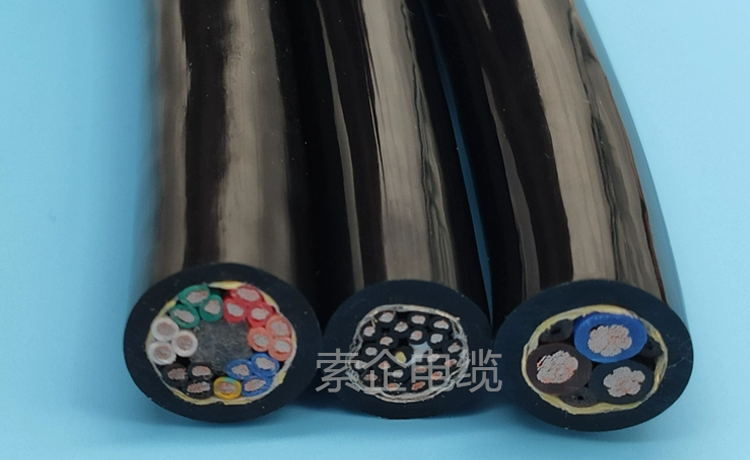
Category: Polyurethane Cable
Hotline
Tel: +86 133 1175 6197
WeChat: L13311756197
Email: postmaster@suoqi-cable.com
Corrosion-resistant cables
1. Application Fields
Chemical industry: In chemical production, highly corrosive chemicals such as acids and alkalis are common. Corrosion-resistant cables can be used to connect chemical reactors, pipeline monitoring equipment, chemical pumps, etc., ensuring stable signal and power transmission without fear of cable corrosion from highly corrosive environments.
Marine engineering: such as offshore oil platforms and seawater desalination equipment. Seawater is highly corrosive, and this cable provides reliable circuit connections for underwater detection equipment, marine monitoring instruments, and platform electrical systems, ensuring the equipment operates normally in harsh marine environments.
Sewage Treatment Facilities: During the sewage treatment process, sewage contains various corrosive components. Corrosion-resistant cables are suitable for connecting mixers, level meters, pumps, and other equipment in sewage treatment tanks, effectively resisting the corrosion of sewage and extending the service life of the cables.
2. Product Features
Excellent corrosion resistance: Made with special corrosion-resistant sheath materials, it effectively resists corrosion from acids, alkalis, salts, organic solvents, and other chemicals, such as fluoroplastics and neoprene, allowing stable long-term operation in highly corrosive environments.
Good electrical performance: The conductor uses high-purity oxygen-free copper, which has low resistance and high conductivity, ensuring stable transmission of power and signals, reducing energy loss and signal interference. At the same time, the insulation material has high insulation resistance and voltage breakdown resistance, ensuring the cable's electrical safety.
Strong mechanical performance: It has certain tensile, compressive, and wear-resistant properties. Even in complex installation and usage environments, it is not easily mechanically damaged, ensuring the normal use of the cable.
Good weather resistance: can adapt to different climatic conditions, whether high temperature, low temperature, humid or dry environments, it can maintain stable performance and is not easily aged or cracked.
3. Cable Structure
Conductor: Generally made of stranded oxygen-free copper wire. According to the specifications and applications of the cable, different conductor structures can be selected to meet different current carrying capacities.
Insulation layer: Use chemically resistant insulating materials, such as cross-linked polyethylene, polytetrafluoroethylene, etc., to provide reliable electrical insulation performance.
Shielding layer: Optional metal braided shielding (such as tin-plated copper wire braiding) or aluminum foil shielding, used to suppress electromagnetic interference, improve cable anti-interference capability, and ensure signal transmission accuracy.
Sheath: Using corrosion-resistant sheath materials, such as neoprene, fluoro rubber, etc., tightly wrapping the internal structure of the cable to provide mechanical protection and chemical protection.
PUR Polyurethane Specialized Cable
1. Application Fields
Industrial automation equipment: Widely used in robotic arms, automated production lines, CNC machine tools, and other equipment to meet the power and signal transmission needs during frequent movement and bending processes, such as servo motors and sensors connected to robots.
Drag chain systems: In high-speed drag chain movements, such as automated warehousing and logistics equipment, woodworking machinery, glass machinery, and more, PUR polyurethane cables can operate stably and continuously in drag chains for long periods due to their excellent bending resistance, ensuring reliable equipment operation.
Food processing industry: PUR material is non-toxic, odorless, and resistant to microbial corrosion, meets food hygiene standards, and can be used for internal wiring in food processing equipment, such as motor connections on food conveyor belts and wiring in food packaging machinery.
2. Product Features
Outstanding bending resistance: With special structural design and material selection, it can withstand millions of bending cycles, making it unlikely to suffer from core breakage or skin breakage, making it suitable for high-dynamic sports environments.
Wear resistance: PUR polyurethane sheaths have high wear resistance, effectively resisting friction and scratches, extending cable service life, and maintaining good appearance and performance even in rough working environments.
Oil and chemical resistance: It has good tolerance to various greases, lubricants, and common chemicals, allowing normal operation in oily and chemical contaminated environments to maintain stable cable performance.
Antimicrobial: Effectively resists the corrosion of bacteria, mold, and other microorganisms, especially suitable for industries with high hygiene requirements such as food and pharmaceuticals.
Good low-temperature resistance: It maintains good flexibility even in low-temperature environments, does not harden or become brittle due to low temperatures, and can be used normally in environments of -40°C or even lower.
3. Cable Structure
Conductor: Multiple strands of fine oxygen-free bare copper wire or tin-plated copper wire stranded together, meeting conductor standards for high-flexibility cables, offering excellent flexibility and conductivity.
Insulation layer: Use high-quality insulating materials such as PE and PVC to ensure excellent electrical insulation performance while maintaining a certain degree of flexibility to adapt to cable bending movements.
Tension Components: Tension fibers (such as Kevlar fiber) or wire ropes are installed inside the cable to enhance its tensile capability and meet the mechanical requirements of highly dynamic environments.
Shielding layer: Shielding layers can be installed as needed, such as tin-plated copper wire braided shielding, to shield against electromagnetic interference and ensure signal transmission stability.
Sheath: Made of PUR polyurethane material, usually available in gray, black, and other colors, offering good wear resistance, oil resistance, and chemical corrosion resistance.
