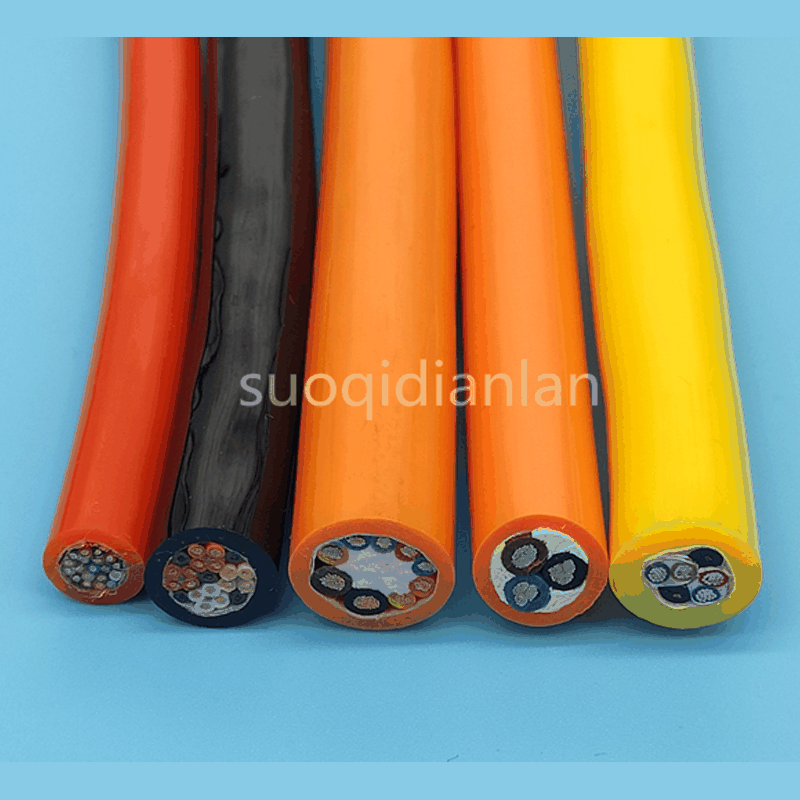
Category: Seawater-Resistant Cable
Hotline
Tel: +86 133 1175 6197
WeChat: L13311756197
Email: postmaster@suoqi-cable.com
Shanghai Suoqi Marine Engineering Ship Special Anti-Seawater Cable — A Solid Link for Marine Engineering
In the complex environment of offshore engineering vessel operations, reliable cables are a key element to ensure stable equipment operation and precise information transmission. The marine engineering vessel-specific seawater-resistant cables developed by Shanghai Suoqi, with their excellent corrosion resistance and bend resistance, have become the preferred choice in the field of marine engineering, safeguarding the efficient execution of various marine operations.
1. Top-tier corrosion resistance, withstanding harsh marine environments
Marine engineering ships are exposed to ocean environments with extremely high salinity, high humidity, and various corrosive substances for long periods, which imposes almost stringent requirements on the corrosion resistance of cables. Shanghai Suoqi's specialized seawater-resistant cable handles such challenges with ease:
Special materials forge a strong defense line
The cable's outer sheath is made of a polymer material developed with a special formula. This material not only possesses extraordinary corrosion resistance that ordinary cable sheaths do not have, but also provides significant protection against various erosive factors in the marine environment. Against the high concentration of salts in seawater, it can effectively prevent the penetration of corrosive ions such as chloride ions, avoiding corrosion of the cable's internal metal structure; for corrosive mucus secreted by marine organisms and potential microbial erosion, its special chemical structure and surface properties make it difficult for these harmful substances to adhere, thereby ensuring the cable's integrity and stable performance.
Comprehensive protection features
Radiation-resistant
In the marine environment, although the radiation intensity is relatively low, long-term accumulation may still affect signal transmission and material performance inside the cable. Shanghai cable companies' cables, through special shielding designs and material selection, can effectively resist trace radiation that may exist in the marine environment, ensuring that the electronic components and signal transmission lines inside the cable are not disturbed and always maintain a stable working state.
Ozone resistant
Ozone occasionally appears in the marine atmospheric environment, especially under certain special meteorological conditions. Ozone has strong oxidative properties and can accelerate the aging and cracking of ordinary cable jackets. However, the jacket material of this cable has extremely high resistance to ozone, and even when exposed for long periods to ozone-containing marine atmosphere, it does not show obvious signs of aging, greatly extending the service life of the cable.
Excellent weather resistance
Whether under the scorching heat of the blazing sun, the harsh baptism of strong winds and heavy rain, or the low-temperature challenge of a severe winter, this cable can maintain the stability of its physical and chemical properties. In high-temperature environments, the cable does not soften, deform, or experience a decline in performance, ensuring efficient power transmission and signal delivery; in low-temperature environments, the cable still maintains good flexibility, does not become brittle or crack due to the cold, guaranteeing the normal operation of marine engineering vessels under various extreme weather conditions.
Acid-base salt fog corrosion immunity
In addition to high-salinity seawater, there may also be localized acid-base changes in the ocean caused by industrial emissions, geological activities, and salt spray erosion. Shanghai Suo Qi's seawater protection cables, with their unique outer sheath materials and structural design, can easily withstand these complex chemical corrosion conditions. Whether in highly acidic areas or alkaline environments, the cables are not corroded, always providing reliable connections for equipment on ships.
Solvent corrosion resistance
During the operation of offshore engineering vessels, there may be contact with substances such as oil contamination and chemical solvents. These substances pose a great threat to ordinary cables and may cause the cable sheath to swell or dissolve, thereby damaging the cable. However, this cable has good resistance to commonly encountered external solvents, and even with prolonged exposure to these solvents, it can maintain the integrity of the sheath and the performance of the cable, ensuring the stable operation of the ship's equipment.
2. Outstanding bending resistance, meeting the complex operational requirements of ships
When marine engineering vessels are operating, the equipment on board frequently moves, rotates, lifts, and so on. This requires the cables connecting the equipment to have excellent bending resistance to adapt to complex and variable working conditions. Shanghai Suoqi's seawater-resistant cables for marine engineering vessels have demonstrated remarkable advantages in this regard:
Highly flexible design ensures smooth operation
The cable features unique overall structural design, using highly flexible conductor and insulation materials. The conductor is made by twisting multiple strands of fine copper wire or alloy wire, which allows the conductor to distribute stress more evenly during bending, reducing the risk of breakage caused by concentrated stress. At the same time, the insulating material also has good flexibility, allowing the cable to fit tightly during bending and maintain good insulation performance. When cranes on ships perform lifting operations, cables need to continuously bend and stretch along with the crane's boom. This cable can easily follow its movements and bend freely, ensuring stable transmission of power and signals without issues such as open circuits, short circuits, or signal interruptions caused by bending.
Fatigue resistance ensures long-term reliability
After special processing, this cable has excellent fatigue resistance. Under long-term repeated bending conditions, ordinary cables are prone to conductor breakage or insulation damage due to metal fatigue. This cable from Shanghai Cable Enterprise greatly enhances fatigue strength by optimizing the material's crystal structure and improving processing techniques. Even after thousands of bending cycles, the cable can maintain good performance, providing reliable support for long-term, high-intensity operations on marine engineering vessels. This characteristic is especially important in some offshore engineering projects requiring long-term continuous operation, effectively reducing work interruptions and economic losses caused by cable failures.
Ultra-long bending life reduces maintenance costs
Through rigorous quality inspection and extensive practical application validation, Shanghai Suoqi's marine engineering ship-specific seawater protection cables have an exceptionally long bending life. Compared to similar products on the market, they can withstand more bending, and their service life advantage is significant in frequently bent working environments. This means that throughout the entire service life of marine engineering vessels, there is no need to frequently replace cables, greatly reducing maintenance and time costs. For offshore engineering vessel operators, this not only improves operational efficiency but also reduces potential risks associated with equipment maintenance, creating greater economic benefits for the company.
3. Wide range of application scenarios to meet diverse operational needs
This seawater protection cable specially designed for marine engineering vessels by Shanghai Suoqi, with its excellent performance, is widely used across various fields of marine engineering vessels:
Power transmission core
As a key connecting component of ship power systems, it provides stable and reliable power transmission for various high-power equipment such as propulsion motors and generators. During marine engineering vessel navigation, propulsion motors require a continuous and stable power supply to propel vessels forward. This cable can withstand large current transmissions, efficiently delivering the power generated by the ship's power generation equipment to the propulsion motors, ensuring stable navigation speed and power output even in complex sea conditions.
Equipment control hub
In the control systems of various mechanical equipment on ships, such as cranes, winches, and windlassers, cables play an important role in transmitting control signals. They can quickly and accurately transmit control commands issued by operators to the equipment's actuators, enabling precise operation. When cranes carry out cargo loading and unloading, operators send various action commands through the control console in the control room. These commands are quickly transmitted to the crane's motors and hydraulic systems, enabling them to hoist, translate, and lower cargo according to predetermined actions, ensuring efficient and safe loading and unloading operations.
Communication and Monitoring Bridges
On modern marine engineering vessels, communication and monitoring systems are crucial. Cables are used to connect communication devices on the ship, such as satellite phones, radios, network equipment, and various monitoring sensors, such as liquid level sensors, temperature sensors, pressure sensors, etc., enabling real-time communication between the ship and the land, as well as real-time monitoring of the ship's own conditions and the surrounding marine environment. Through these communication and monitoring devices, the ship can promptly obtain weather information and navigation instructions, while transmitting data such as the ship's location and equipment operating status back to the land control center, providing strong support for the ship's safe navigation and efficient operations.
4. Customized services tailored to personalized project needs
Shanghai cable companies understand that different offshore engineering vessel projects may have varying cable requirements, so they offer comprehensive customized services to meet customers' personalized needs:
Specification customization
Specifications such as cable conductor thickness and number of cores can be customized according to parameters such as the ship's power output, operating voltage, and current. For equipment with higher power, large-section conductors can be customized to ensure sufficient current capacity to meet the equipment's power needs; For situations requiring simultaneous transmission of multiple signals or controlling multiple devices, multi-core cables can be customized, with each core transmitting different signals independently to avoid signal interference and ensure the normal operation of each device.
Functional customization
In addition to basic power transmission and signal transmission functions, special functions can be added according to the specific environment and needs of ship operations. In some operational areas sensitive to electromagnetic interference, such as electronic equipment compartments on ships or near high-precision monitoring equipment, cables with shielding layers can be customized to effectively block external electromagnetic interference, ensuring that signals transmitted inside the cables are not affected and guaranteeing normal equipment operation; For deep-sea high-voltage environments,
